
Root Flare Excavation: The Complete Guide to Fixing Buried Root Flares
Learn how root flare excavation saves buried, suffocating trees. Spot the signs, fix the problem, and keep your Minneapolis trees healthy for years.
Read the guideWe find the buried root flare and uncover it by hand — no machinery, no noise, no damage to your lawn. Your tree gets to breathe again.
In the yard
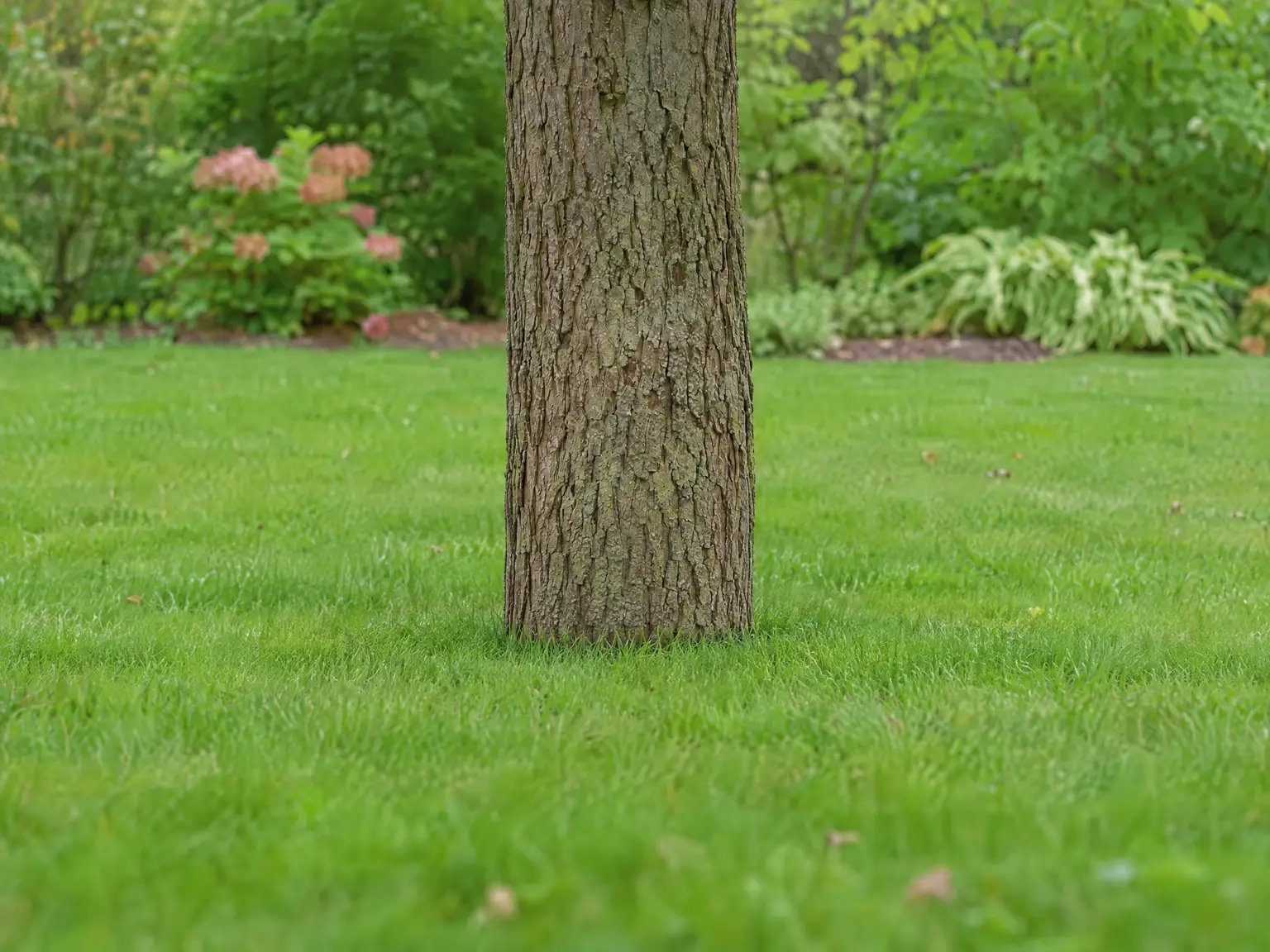
Under the grass
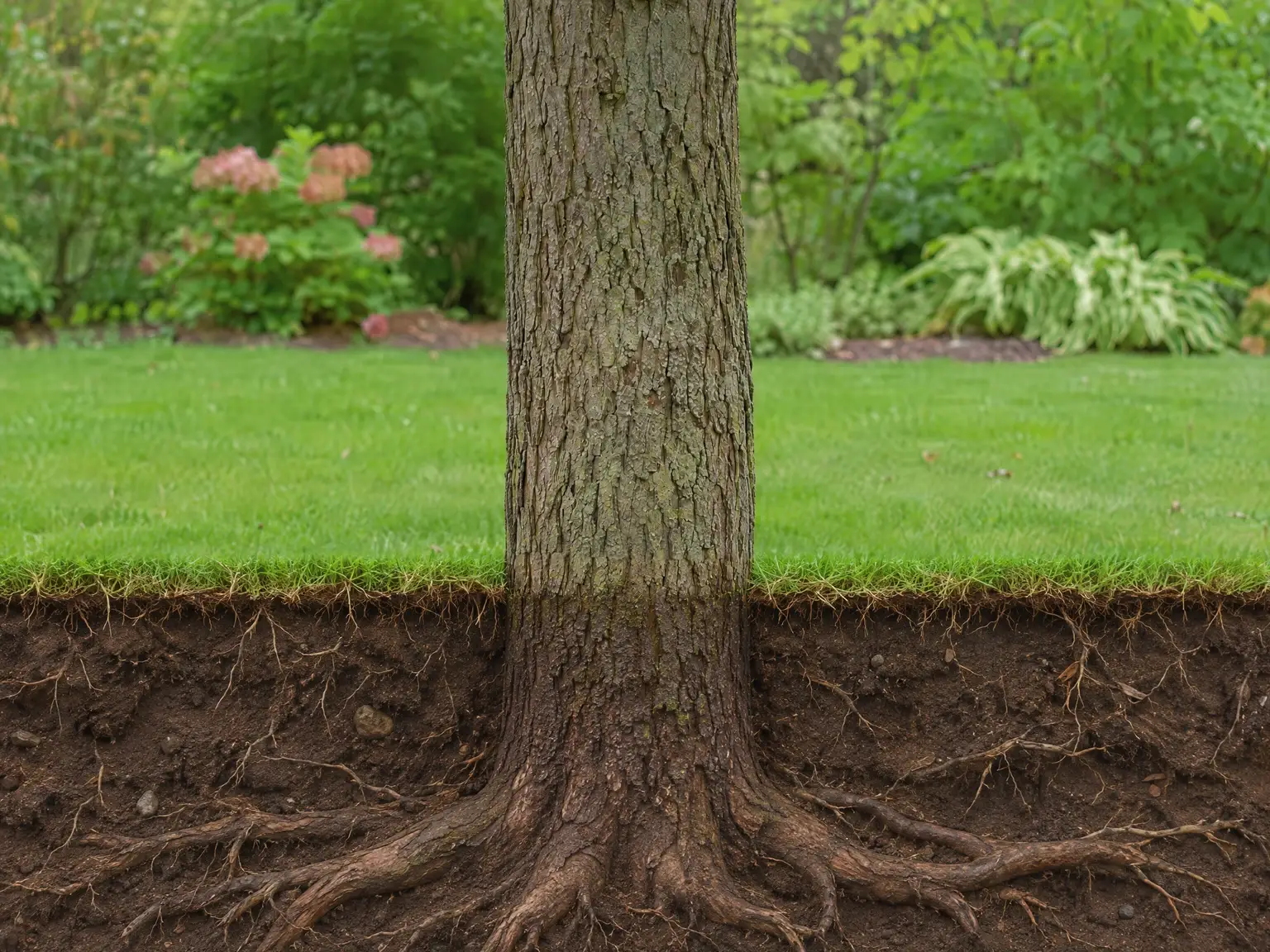
A Flare Check confirms it in about 30 minutes.
A tree’s flare and roots need air. Bury them under too much soil or too much mulch, and the tree slowly suffocates.
In the yard
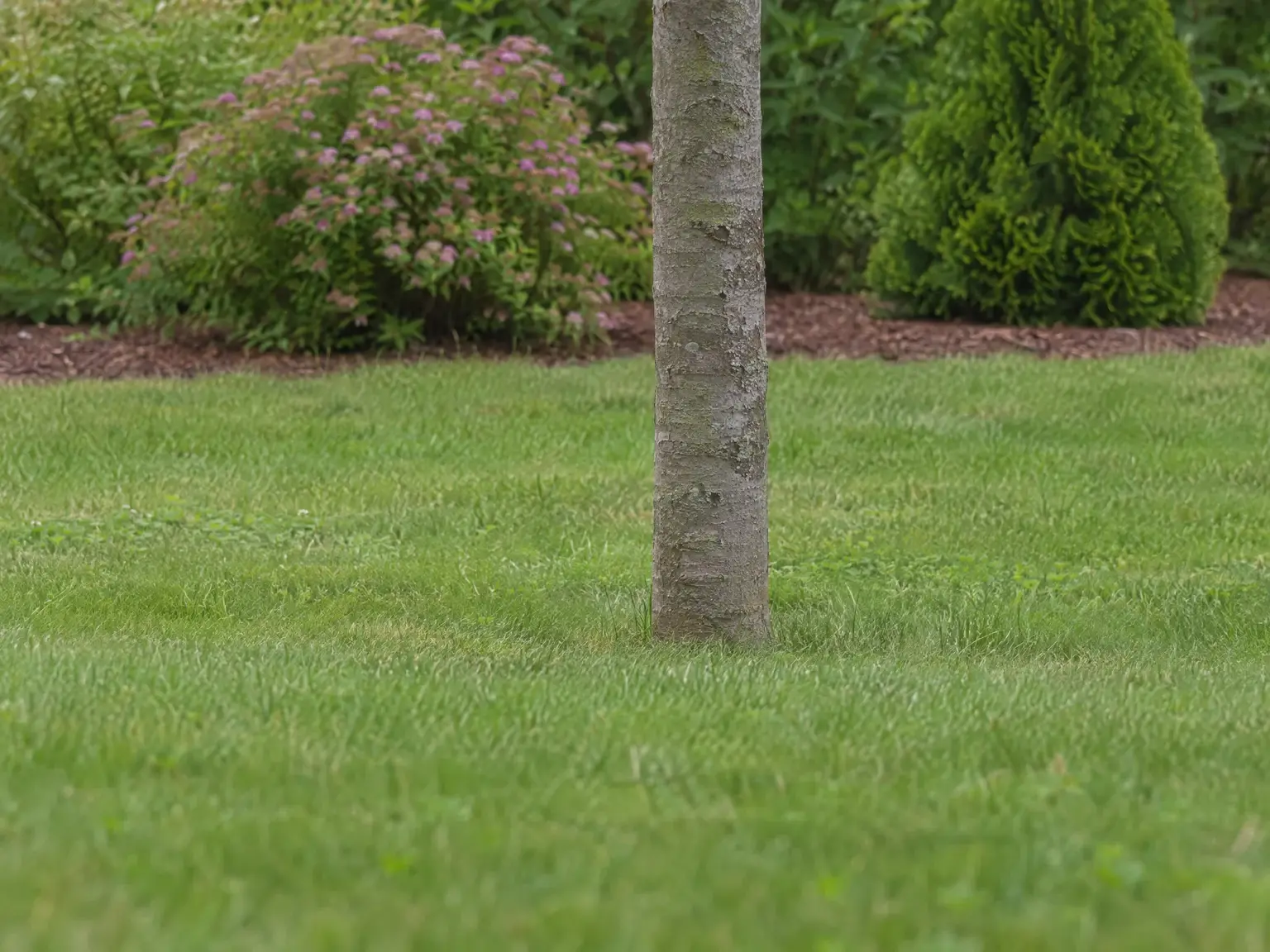
Under the grass
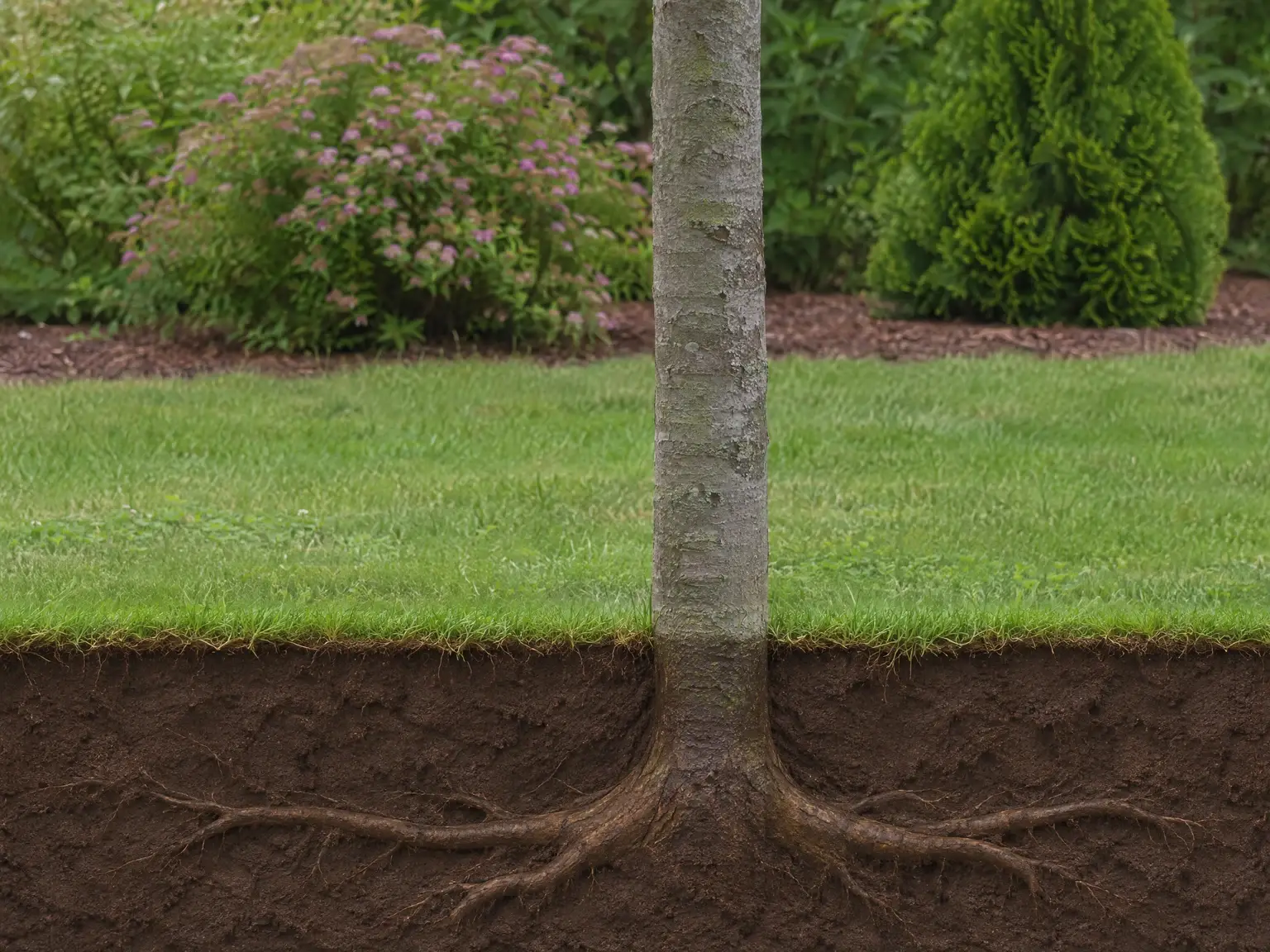
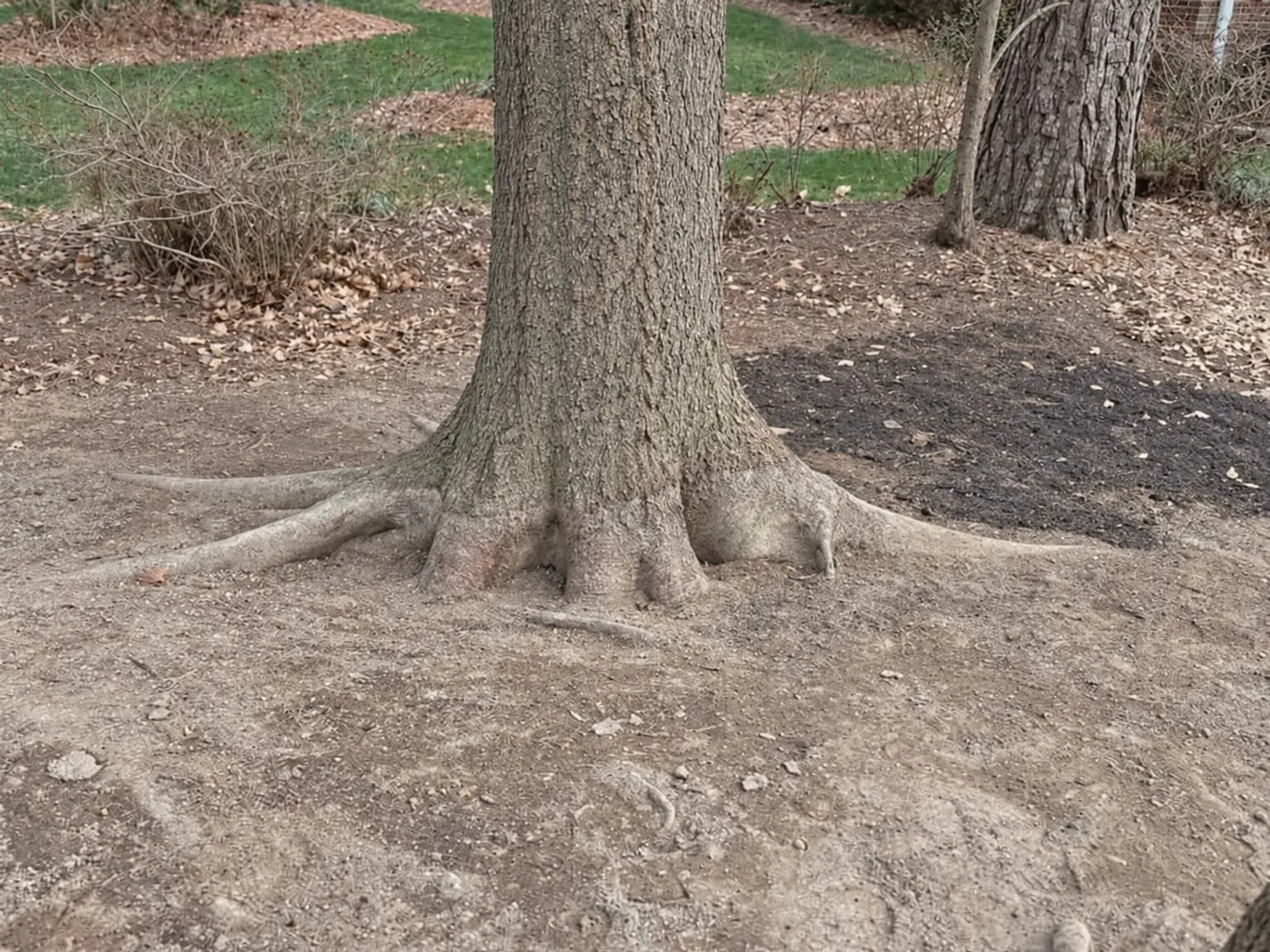
A healthy trunk widens where it meets the ground — trees should have hips. If yours goes straight down like a fence post, the flare is buried.
In the yard
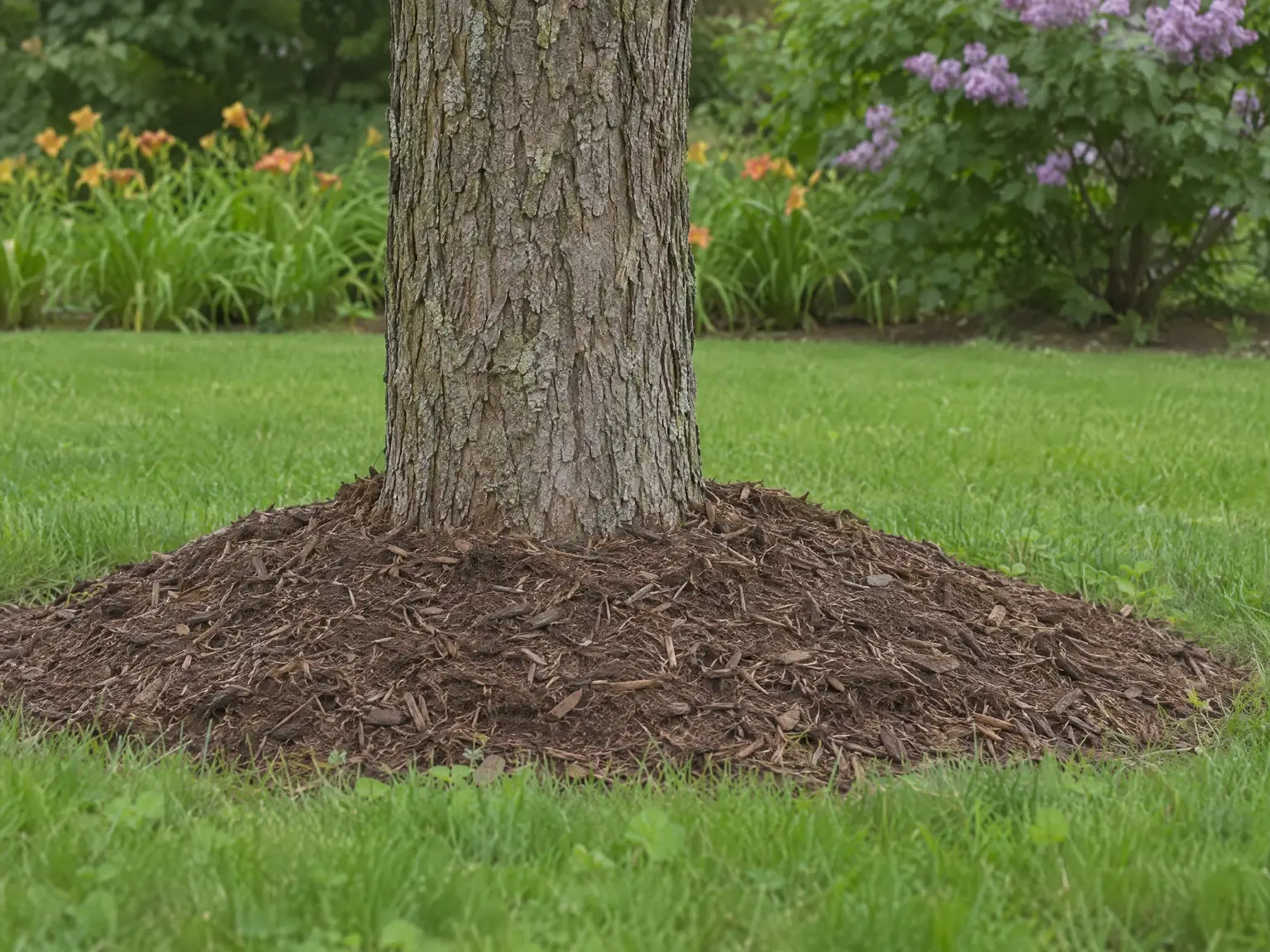
Under the mulch
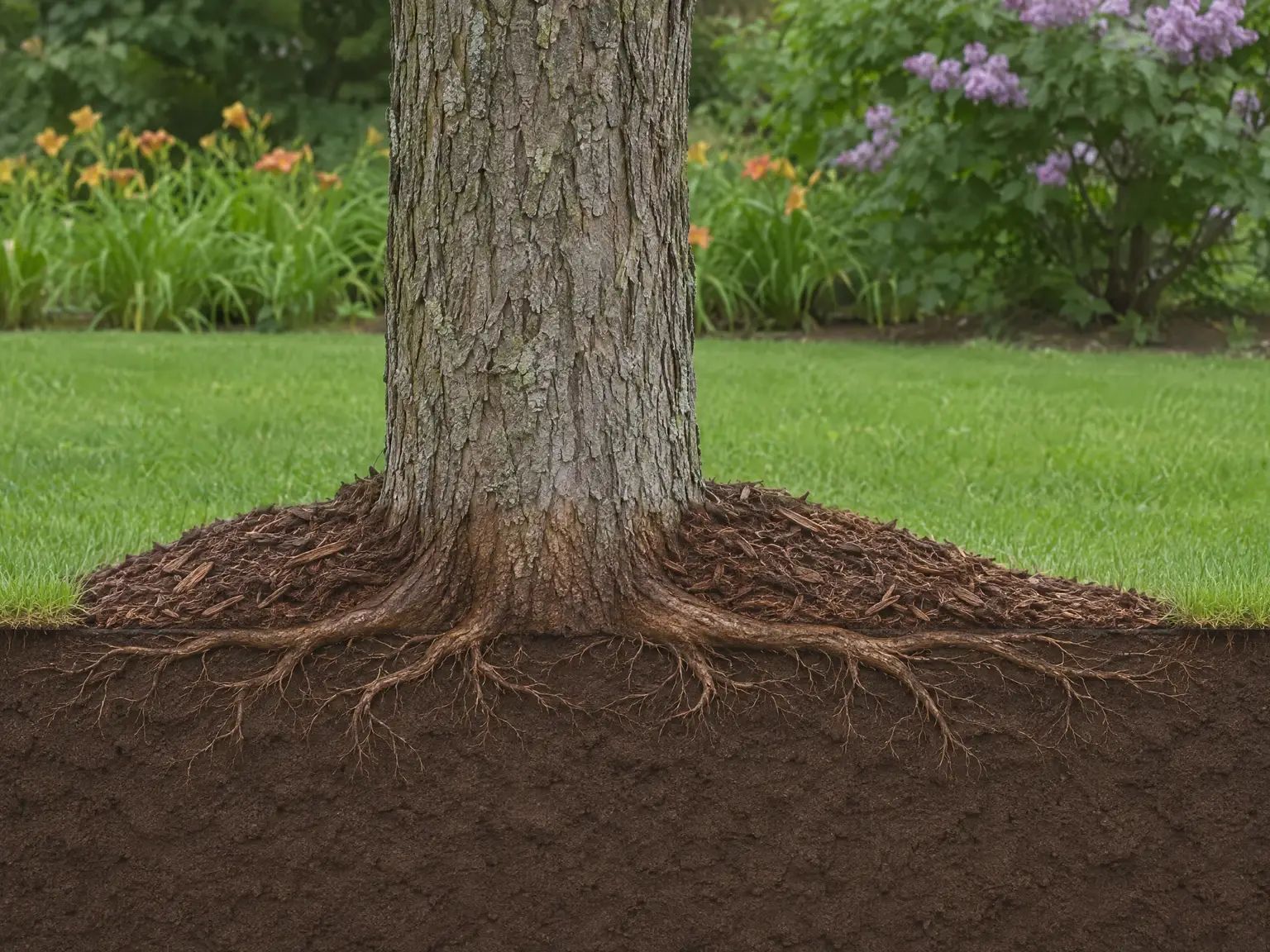
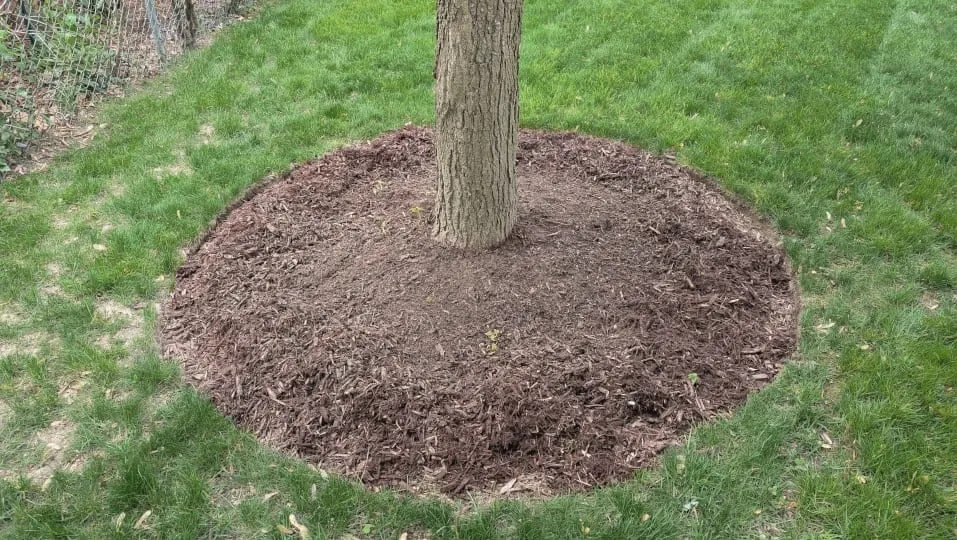
Even a tree planted at the right depth can have its flare buried, by mulch piled against the trunk (a “mulch volcano”). Under it the bark stays wet and decays, and the flare suffocates.
In the yard
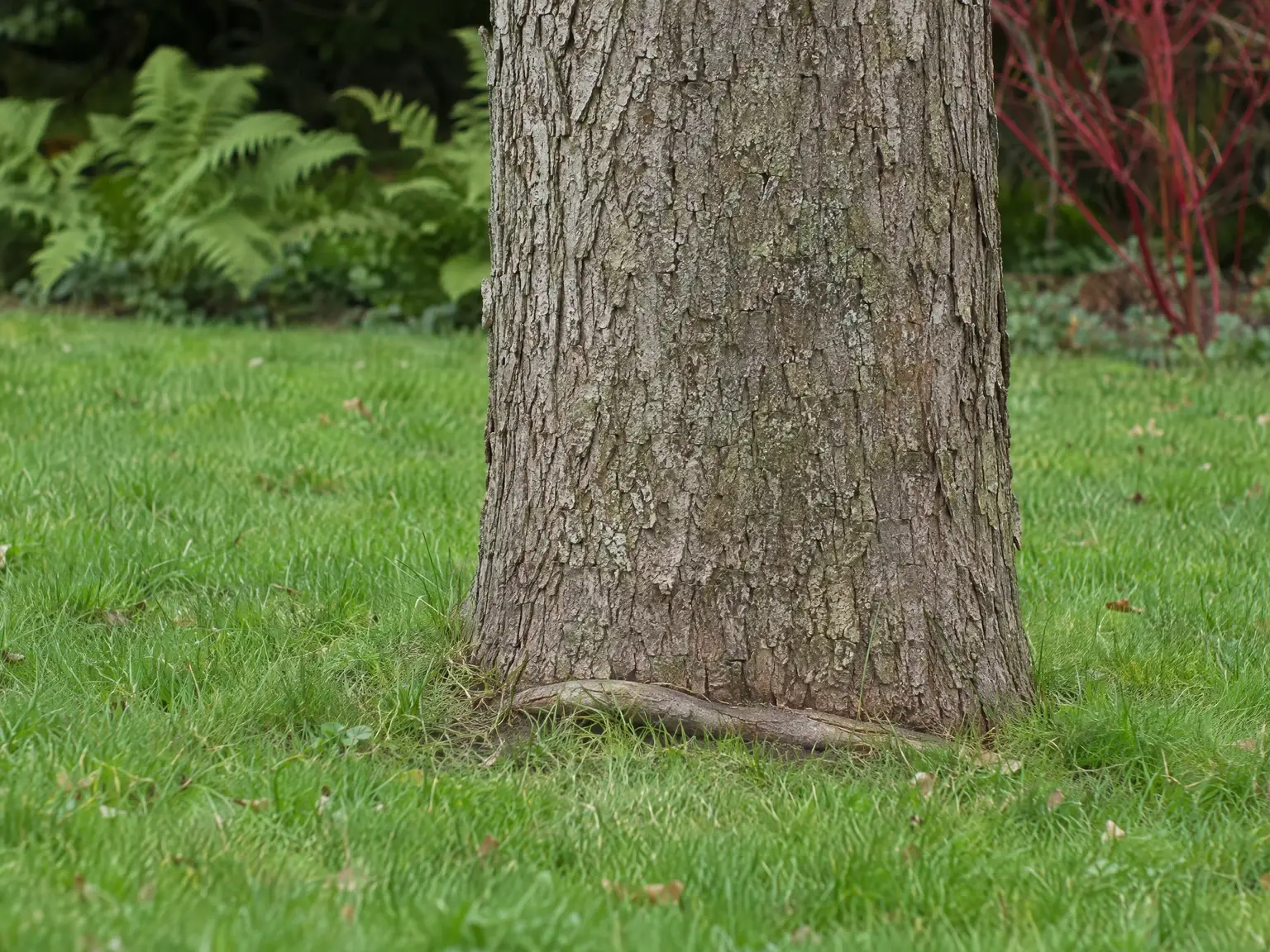
Under the grass
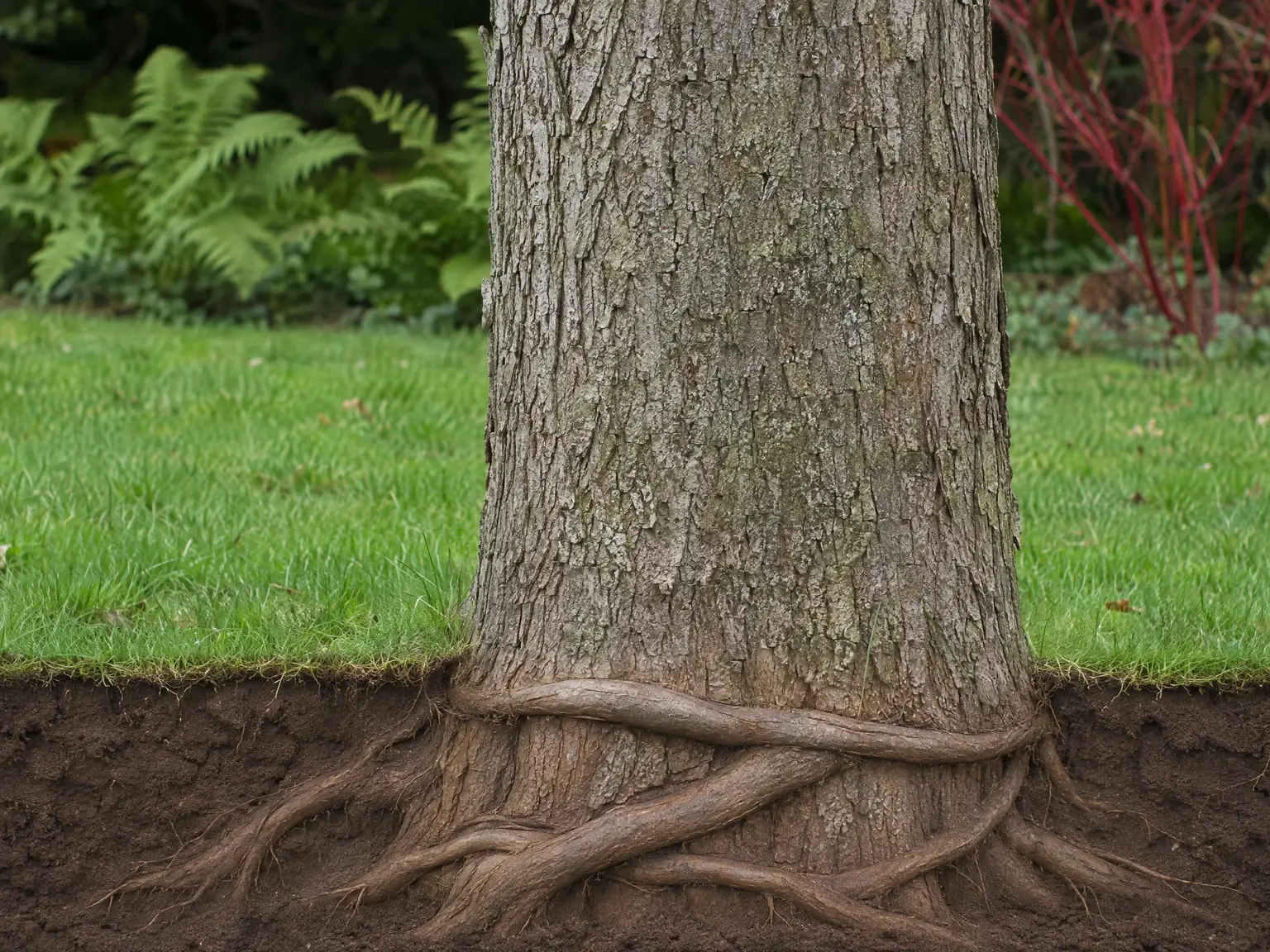
A root lying tight across the base of the trunk is a girdling root. Every year the trunk grows, the root presses in deeper.
Prognosis: excellent when caught early.
90%
of Minneapolis boulevard trees sit 4+ inches too deep.
UMN boulevard audit, 300+ trees
87%
of nursery trees arrive with excess soil over the roots.
UMN survey, 881 trees at 15 nurseries
93%
of “professionally planted” trees have buried flares.
Smiley & Booth audit, 2,000 trees
Trowels, hori-hori knives, whisk brooms and a steady hand — so the only thing that changes in your yard is the tree’s health.
4 inchesto the first woody root
Measure. The Flare Check: we probe, measure and photograph exactly how deep the root flare is buried.
Excavate by hand. We remove excess soil and mulch with precision hand tools until the natural flare is exposed, and prune minor girdling roots.
Protect. We finish with a flat mulch ring — 2–3 inches deep, pulled back from the trunk — so the problem stays fixed.
Zero-impact promise No ruts, no cracked driveways, no damaged sprinkler heads.
See the full processEvery job is photographed before and after, so you can see exactly what changed.
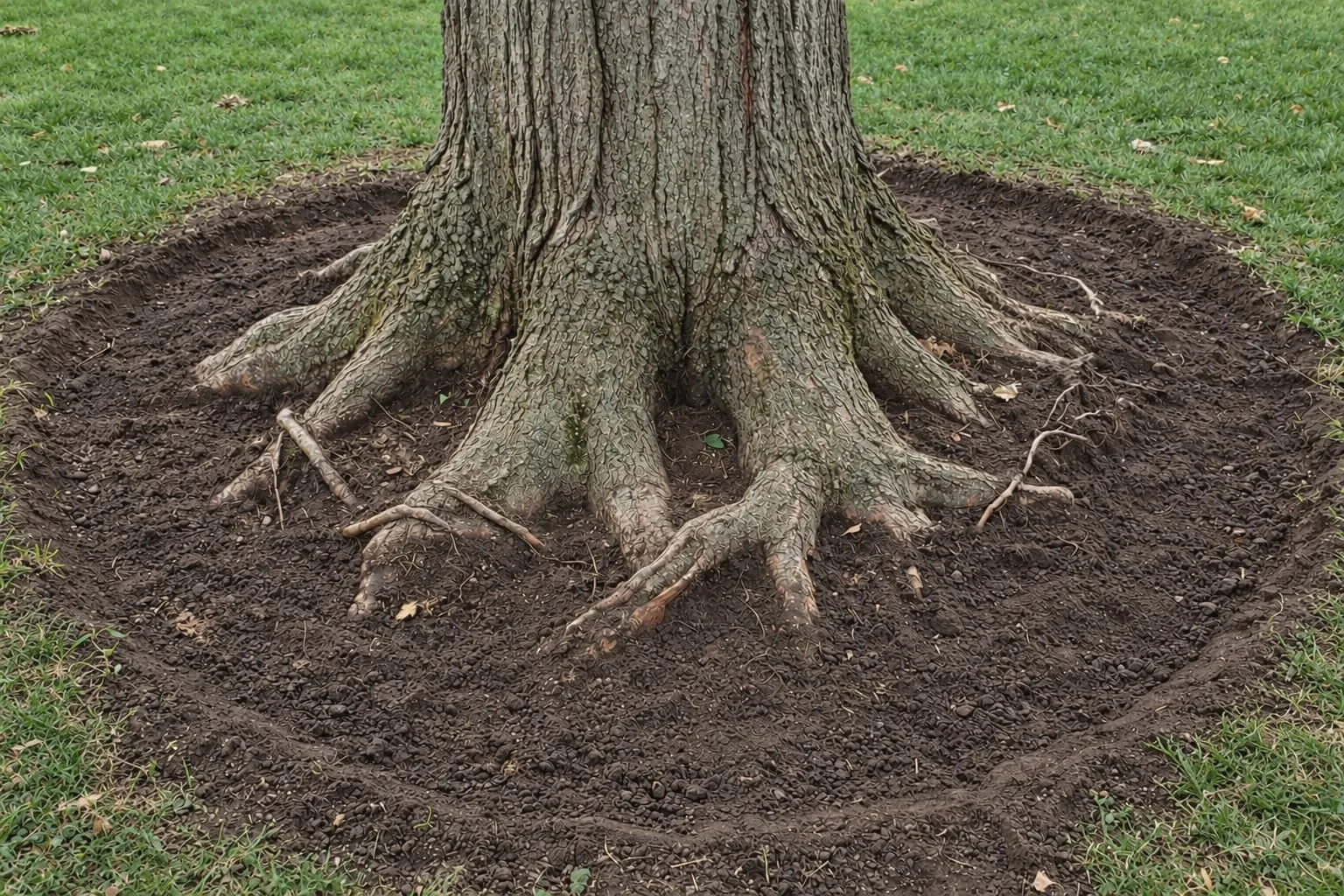
Before
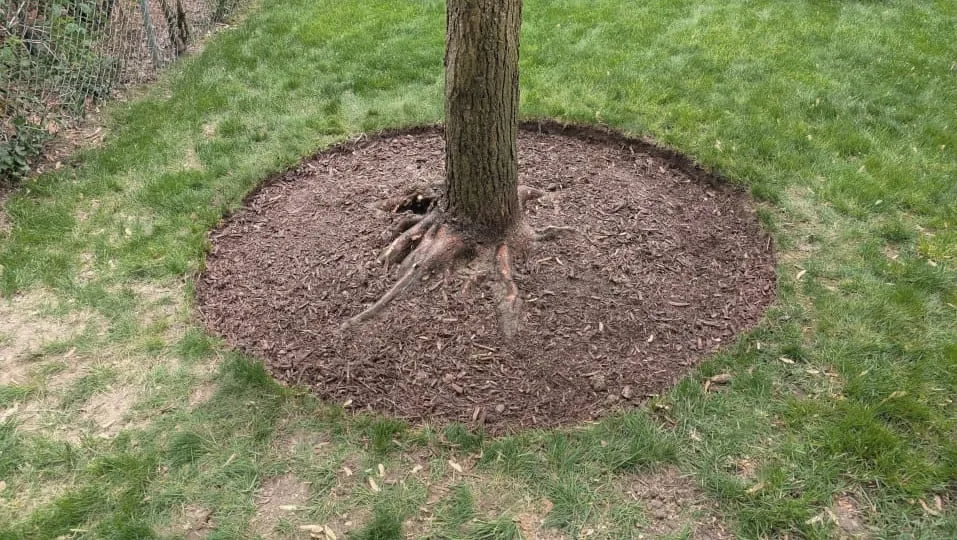
After
Learn how root flare excavation saves buried, suffocating trees. Spot the signs, fix the problem, and keep your Minneapolis trees healthy for years.
Read the guideIt’s carefully removing the excess soil and mulch around the base of a tree to expose the root flare. Buried flares lead to trunk decay, oxygen-starved roots and girdling roots — chronic stress that shortens a tree’s life.
Look at the base. If the trunk goes straight into the ground with no visible flare, or mulch is piled against the bark, it’s likely buried. A Flare Check measures exactly how deep.
About 30 minutes, covering one or two trees. If you book follow-up work within 30 days, the Flare Check is credited toward it.
No. We work only with precision hand tools — no compressors, trenchers or heavy equipment — so there are no ruts, cracked driveways or broken sprinkler heads.
Anywhere within about 60 miles of Minneapolis, including St. Paul, Edina, Richfield, Bloomington, Golden Valley and St. Louis Park.
In about 30 minutes, a Flare Check tells you how deep your tree is planted and exactly what it needs.
While the ground is frozen, Flare Checks and excavation wait for the thaw. We still take your request, and winter salt and ice care goes ahead.
What happens next
We’ll call you back within one business day.